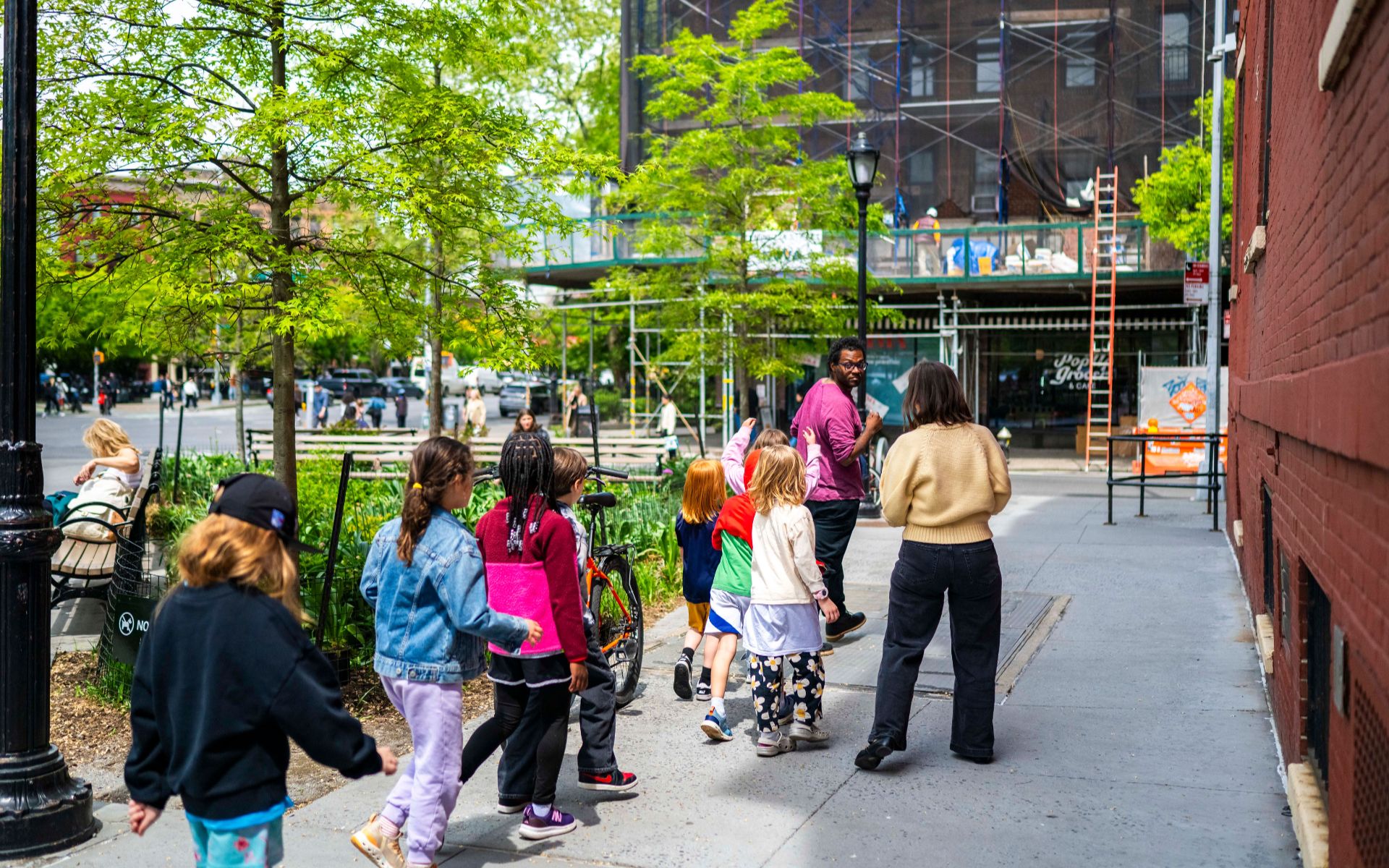
Fieldwork turns the world into a classroom, empowering students to explore, investigate, and connect learning to real-life experiences
At LREI, students from the Fours through 12th grade are not passive observers on field trips; they are active researchers conducting fieldwork. As a cornerstone of experiential learning, fieldwork challenges students to pose questions, gather data, and return to the classroom to examine, interpret, and synthesize what they have learned from the world around them.
Our founder, Elisabeth Irwin, who introduced the concept of “fieldwork” to American education, envisioned a community of learners who understood that meaningful learning requires stepping beyond the school building to make sense of and forge connections with the wider world.
More than 100 years later, her vision continues to shape an approach to learning that uses the world as a laboratory for deep engagement with the ecosystems, cultures, and communities that surround us.
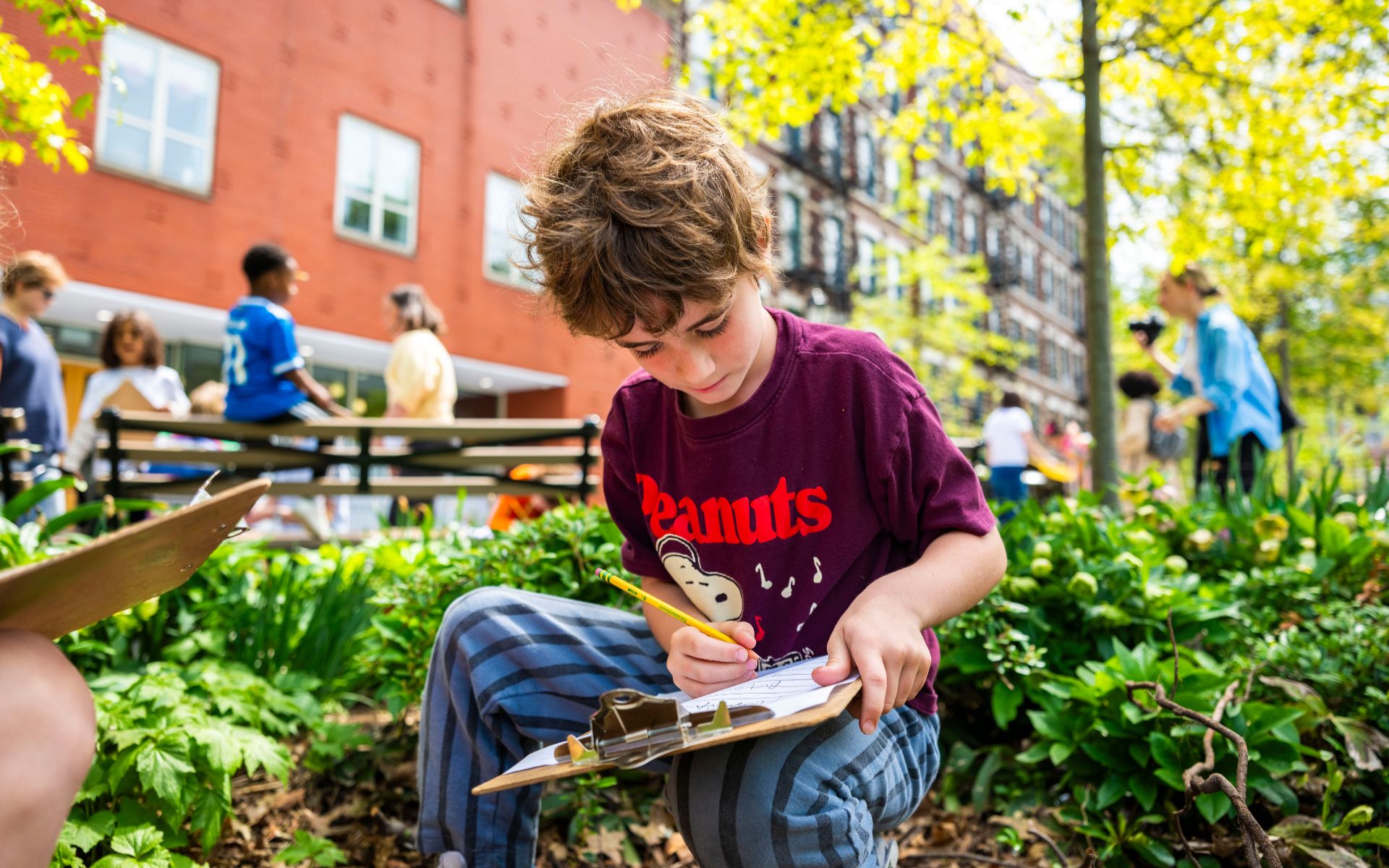
Fieldwork transforms learning from something students study into something they live. As they venture beyond the classroom, the knowledge they gain in math, science, reading, writing, art, and language become tools for exploration, discovery, and connection. Over fourteen years, students learn to observe ecosystems, investigate questions, collect evidence, and engage thoughtfully with the communities and cultures around them. Along the way, they develop the habits of mind and the sense of purpose that prepare them not only for what comes next, but for a lifetime of learning.